Why food is the part of Appreciation Week people remember
Employees forget the speech and remember the lunch. That is the practical case for putting employee appreciation catering in Toronto at the centre of the week rather than treating it as a line item under the town hall. A meal is immediate: nobody has to interpret it, sign up for it, or be entertained by it. It signals that someone planned ahead, and it creates the one moment in the week where a whole floor stands in the same room.
The reverse is also true. Generic sandwich platters, a menu with nothing for the vegetarians, food that arrives 40 minutes late, or a messy setup in the only open space all shrink the effort in employees’ eyes, whatever the message from leadership said.
Toronto companies express appreciation differently by industry, but food shows up in all of them:
- tech companies lean toward informal buffet-style lunches on an anchor day
- corporate and professional offices want a cleaner, more polished shared setup
- hotels, hospitals, and hospitality teams organize around shift windows instead of one fixed lunch
- agencies and studios often run smaller department meals across the week
What good appreciation food does in the room shows up in behaviour: people arrive on time, stay longer, talk across teams, and mention the event afterward. Thai food earns its place here because one order can carry noodles, rice, curries, and vegetable mains at the same time, so a mixed office finds something it wants without a second caterer.
Choose the format by budget and headcount
The right format follows from headcount and space, not from the most impressive idea. Three formats cover almost every downtown appreciation event, and each has a clear best use.
Party trays for smaller teams and shorter windows. For a department of 10 to 40, a short lunch slot, or a recurring thank-you meal, party trays are the simplest option: easy to order, easy to lay out on a boardroom table, and far more interesting than the sandwich-and-cookie default. They suit offices with limited counter space and teams eating in one wave.
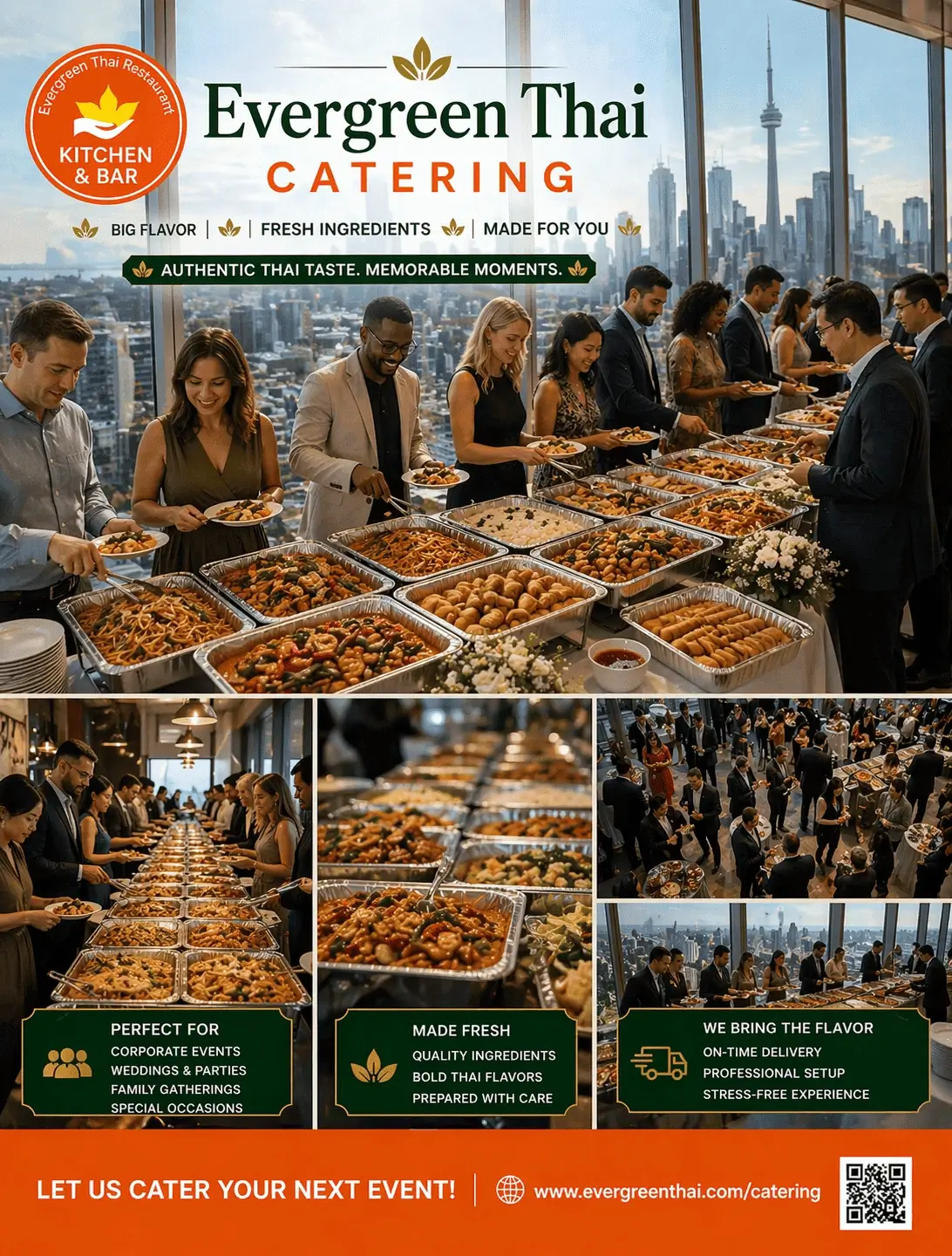
Buffet-style setups for team-wide events. Once the group passes about 40, a Thai buffet-style setup gives real choice, supports mixed diets, and feels more intentional than boxed meals. This is usually the sweet spot for a company-wide appreciation lunch: enough variety to talk about afterward, without the organizer managing dozens of individual orders.
Multi-line buffets for large events. Above 200, the format has to be built around flow: duplicate serving lines, clear signage, dietary labels, and staggered serving windows so a single line does not become the event. Organizers should plan for their own volunteers or the venue’s staff to keep lines moving and trays replenished.
Boxed or individual meals are available on request and make sense for shift-based teams or people leaving early, but for a room that is meant to feel like a celebration, shared food does the job better.
Plan a full week, not one lunch
A week creates a different problem from a single lunch: repeat the same catered meal five days running and people stop noticing by Wednesday. The fix is to vary the format rather than complicate the menu.
A workable five-day rhythm:
- Monday, party trays. A casual drop-off lunch with Spring Rolls, Pad Thai, and Cashew Chicken sets the tone without a big setup.
- Tuesday, department lunches. Smaller meals by team, staggered across the day, feel more personal and are easier to schedule than one company-wide slot.
- Wednesday, Thai buffet-style spread. The centrepiece day: two curries, two noodle trays, a rice tray, and a full vegetarian main, laid out in the largest open space.
- Thursday, a lighter day. Mango Salad, Tom Yum or Tom Kha soup, Golden Tofu, and Vegetable Fried Rice give people a break from heavier mains.
- Friday, the celebratory group meal. Employee Appreciation Day itself falls on the first Friday of March, and for many companies this is the lunch with the executive walkaround.
Themed or station-style days work when the theme stays practical. A Thai street-food station, with satay, spring rolls, and noodles served from a single counter, creates movement and conversation in a way a drop-off cannot. Larger teams need structure around it, though: signage, timing, and someone watching the line, or the creative idea becomes a queue.
Match every idea to the office. Ask whether people eat at once or in shifts, whether there is room for a buffet, and whether departments sit on different floors. The best appreciation idea is the one that feels creative to employees and stays simple for the person running it.
How the plan changes from 50 to 1000 employees
Appreciation events get harder with headcount in predictable steps, and the format decision should come before the menu at every size.
Around 50 employees. Keep it simple. Party trays or a small buffet-style spread, one serving table, dietary labels, and a decision about whether people eat at once or in waves. A shared spread beats individual meals here because it creates the social moment that is the point of the event.
Around 200 employees. Logistics start to dominate. One serving line creates delays, so plan duplicate stations, separate and clearly labelled vegetarian and vegan trays, and serving windows by department. Elevator access and setup time become real constraints in downtown towers.
Around 500 employees. The event is now an operations project, even if it feels casual to guests. Plan where staff queue, how long one station takes to serve a given number, how multiple floors are handled, and who manages plates, waste, and replenishment. This is the comfortable upper range for a single kitchen order; the menu should be built for efficient serving with dishes that hold.
500 to 1000 employees. Contact the kitchen early to confirm capacity and timing. Successful events at this size run on multiple food stations, repeated menu lines, staggered windows, and careful delivery coordination. The station and layout logic is laid out step by step in the guide on how to cater for 1000 employees.
At every rung, the guest experience should stay simple while the operations behind it get stronger. A well-run appreciation event is a logistics problem disguised as a celebration.
Build a menu that feels generous to a mixed office
The strongest appreciation menu is broad rather than niche. The goal is not a rare food experience; it is a spread that a 35-person mixed office looks at and recognizes as a treat. Thai catering does this well because one order spans familiar comfort dishes and bolder flavours.
A balanced appreciation spread for most downtown offices:
- Starters to share: Spring Rolls, Chicken Satay, Crispy Calamari
- Mains with range: Cashew Chicken, Basil Stir Fry, Green Curry, Massaman Curry (the mildest, sweetest option for spice-cautious colleagues)
- Noodles and rice: Pad Thai, Pad See Ew, Pineapple Fried Rice, jasmine rice
- Vegetarian mains with presence: Tofu Basil, Mixed Vegetable Curry, Golden Tofu
- Something fresh: Mango Salad to cut through the richer dishes
Spice is the detail organizers overlook. Ask the kitchen to keep shared trays mild to medium and offer chili on the side, so nobody is excluded by heat. Curries at Evergreen Thai are coconut-milk based rather than dairy, which quietly solves a common dietary question. Vegetarian and vegan versions of the noodle, curry, and rice dishes are available on request; state them when ordering.
Menus that try to be exciting by being complicated slow the line and confuse the labels. Six to eight well-chosen trays, replicated across stations for larger groups, serve a big office faster and better than fifteen different dishes.
Make vegetarian coverage part of the design
Vegetarian dishes should be part of the main meal architecture, not a backup tray. Appreciation lunches are symbolic, and a menu that covers vegetarian colleagues weakly feels uneven even when the budget was generous.
A role-based tray design keeps the table unified:
- Anchor trays: substantial vegetarian mains with real volume (Tofu Basil, Mixed Vegetable Curry, Vegetable Pad Thai)
- Bridge trays: dishes vegetarian and non-vegetarian guests share happily (Vegetable Fried Rice, Spring Rolls, Mango Salad)
- Confidence layer: clear notes on egg, nuts, and spice, plus a stated vegan request so dishes are made without fish sauce or oyster sauce
Size vegetarian trays to real table behaviour, not to the strict vegetarian headcount. In mixed groups, everyone takes from the vegetable curry, so it empties first when sized only for the five people who asked for it. The planning ratios in the guide to Thai catering for mixed dietary preferences show how to split a half-vegetarian order.
Two habits make dietary communication effortless. Send one short pre-event preference check to staff and collect answers in one place, then send a single consolidated note to the kitchen with allergy and religious dietary requests stated explicitly. Options such as gluten-aware and no-onion-no-garlic dishes are available on request and confirmed when ordering; the kitchen does not claim certified allergen-free preparation.
Food-based team building people actually attend
Team building works better around a meal than around a scripted activity, because people already know how to engage with food. A shared buffet or a station setup creates conversation without anyone feeling managed, which is why food-based formats keep the highest participation in downtown offices.
Formats that translate well into Appreciation Week:
- Office tasting lunch: five or six trays with small plates, so people try a curry they would never order alone
- Themed buffet: one afternoon built around a cuisine, with the menu explained on a card rather than a presentation
- Department food stations: each team hosts one station in a shared space, which mixes floors that rarely meet
- Milestone or seasonal lunch: a quarter close, a product launch, or the holiday party planned with the same shared-tray logic
The point is not the most unusual activity. It is an experience people will join without being chased, and in most offices good food achieves that better than anything on a facilitator’s agenda.
Delivery logistics and the quote path for downtown offices
Large appreciation orders should go through the catering path rather than a standard app checkout. Evergreen Thai delivers group orders over CAD 200 directly within 5 km of 175 Dundas St W, which covers the Financial District, King West, the hospital row on University Avenue, and the campuses; anything serving 10 or more people belongs in a quote request so the kitchen can plan the tray mix and the timing around the building.
Downtown constraints that shape the order:
- delivery windows squeezed between meetings, often 11:45 a.m. to 1:00 p.m.
- security desks, concierge handoff, and freight elevators that add time at the door
- limited open space for setup and cleanup
- several floors or departments eating at different times
The corporate catering downtown Toronto page lists formats and the delivery radius, and the office catering checklist for downtown Toronto office managers covers the building and delivery-note details in full.
Send the brief early
Keep the brief short and send it early. The kitchen needs six things to recommend a practical setup:
- office address, floor, and access notes
- expected headcount, based on real attendance rather than the invite list
- date, preferred serving time, and whether people eat in waves
- format preference: party trays, buffet-style setup, or boxed meals
- vegetarian, vegan, and allergy requests, consolidated in one note
- a working budget range and the number of days being catered
For a full week, send the whole schedule at once so formats can be varied day by day and repeat dishes avoided. Evergreen Thai Kitchen & Bar has run appreciation lunches for downtown Toronto companies since 2007, from a single department’s party trays to company-wide buffet-style spreads. Send the details to get a catering quote, or call +1 416-581-8668 to talk through a multi-day plan or a large-headcount event.