Why summer changes how downtown groups eat
Summer in the downtown core is busier, not just warmer, and that busyness is what breaks group meal plans. Canada Day, Pride, the Caribbean Carnival weekend, the CNE, concert runs at Scotiabank Arena, Blue Jays home stands at Rogers Centre, Toronto FC and big-match nights at BMO Field, plus conferences and campus events all land in the same 10 weeks. A pair of friends can still improvise. A group of 10, 20, or 30 cannot.
That changes 3 things: how long it takes to gather people, how much buffer the timeline needs, and whether a walk-in plan is realistic at all. On a normal weekday, a restaurant holds a long table without much notice. On a festival Saturday, it does not.
The formats that hold up are the planned ones. Shared party trays delivered or picked up let a group eat where it already is, and a booked group dining table in downtown Toronto removes the search for space on a crowded night. Both reduce the number of decisions made at the last minute.
Summer groups also arrive from more starting points than usual: offices, condos, hotels, transit, campus, and the venues themselves. That makes central location part of the food decision. A summer group meal works when it is:
- Easy to share, so the table does not need 20 separate orders
- Broad enough for mixed preferences, including vegetarian and mild-spice guests
- Close to the group’s route through downtown rather than a detour from it
- Realistic about timing instead of “we will figure it out”
Shared meals beat last-minute individual ordering
For a group in a busy city, a shared meal is the stronger plan, and the reason is friction. Last-minute individual ordering looks simpler from the outside but creates the problems that sink event-day meals:
- Too many separate decisions, made while people are still in transit
- Uneven timing, with half the food arriving before the other half
- Missing items and confusion about whose order is whose
- No clear picture of dietary coverage
- One organizer left to fix everything on their phone
In a quiet season those costs are tolerable. In summer, every extra step gets amplified by crowds, road closures, and delivery apps running slow. Shared food keeps the event collective: one coordinated table or one coordinated spread instead of dozens of small transactions.
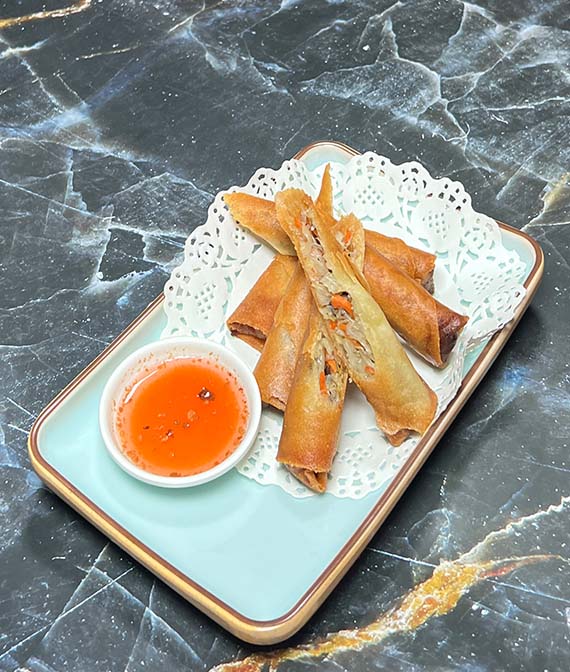
Shared does not mean formal. A family-style set of Pad Thai, a curry, a stir-fry, Spring Rolls, and rice works for a casual watch party, a condo party room, a post-event dinner, or an office lunch. The value is efficiency with a better group experience, and it matters most for the mixed groups summer produces: some vegetarian, some in a hurry, some wanting a full dinner, some arriving late, some local and some visiting. The mixed dietary preferences guide covers how to balance the trays when half the group wants chicken and half does not.
Eating before or after a game or concert
Pre-event and post-event meals have different jobs, and the plan should reflect that. Scotiabank Arena and Rogers Centre sit beside Union Station; BMO Field is further west at Exhibition Place. Evergreen Thai at Dundas and University is a few stops north of Union on Line 1, which makes it a practical staging point for groups heading down to either venue.
Before the event: eat, settle, and move on
A pre-event group meal needs timing discipline more than ambition. People want enough food to feel settled and still make kickoff or the opening act. What works:
- A central location that keeps the route simple
- A table booked for a fixed time, 2 hours before the event on a busy night
- Familiar, fast dishes with broad appeal: Pad Thai, Cashew Chicken, Green Curry, Spring Rolls, jasmine rice
- Family-style ordering so the whole table is served together and finishes together
After the event: staggered arrivals and a social pace
Post-event meals are looser. People arrive in waves, some want a full dinner, some want a lighter plate, and the group wants to talk rather than watch the clock. Shared dishes handle that better than individual plates.
One honest planning note: the dining room closes at 9pm, so a sit-down post-event dinner suits afternoon matches, matinee shows, and early concerts. For a late game, the better move is a party-tray spread ordered ahead and waiting at the condo, office, or hotel suite, which feeds the group at 10:30pm when most kitchens are closed. The full walkthrough of dine-in versus delivery versus pickup for group occasions is in the group dinner planning guide.
What to order for a 10, 20, or 30 person watch party
A watch party still needs real food planning, and the rule is simple: appetizers open the event, mains do the work. Wings and fries cover a 90-minute hangout; a big match or a final with extra time, a pre-game arrival, and a post-whistle lingering crowd needs a meal. Food-first watch parties also include more people by default: guests who are not drinking, families, older relatives, and visitors who came for the evening rather than the bar.
Plan by headcount, using roughly 1 shared main for every 2 guests:
- 10 people: keep it focused. 2 shared starters, 4 to 5 mains, and rice. Pick a few strong dishes rather than many small extras, and make 1 main vegetarian
- 20 people: add structure. 3 starter trays, 8 to 10 mains including 2 vegetarian, and rice. Decide whether guests eat before kickoff or through the match, and set up a self-serve line
- 30 people: think like a host, not a fan. 4 starter trays, 12 to 15 mains with 3 or more vegetarian, rice, and a layout that works without the host hovering. Under-ordering becomes very visible at this size
Match timing shapes quantity. A 3pm kickoff between meal windows can run slightly lighter; a 7pm match overlapping dinner needs a full meal. The guest count and budget guide has the tray math by group size, and the dish list is on the Evergreen Thai menu. If the party is in a building common room, the condo party room catering guide covers loading docks, elevator bookings, and cleanup.
Feeding visiting fans and international groups together
Big summer events bring fan groups and international visitors who often eat as one mixed table, and the best meal for them is the easiest one to use. During major tournaments and concert tours, downtown hosts groups from the UK, Germany, Mexico, Argentina, Brazil, Colombia, Japan, and South Korea, frequently combined with local friends and relatives. That does not mean any group fits a stereotype. It means the table is social, mixed, and moving on a tight schedule.
Thai food works as a middle ground for those tables because it is built for sharing: familiar chicken mains for the cautious, vegetarian dishes for the people who need them, lighter plates for the tired, and richer curries for full appetites. Shared dishes also make the social side easier. People try 2 or 3 things, eat at their own pace, and stay in the conversation.
Fan groups usually want both atmosphere and a real meal, and a Thai restaurant in downtown Toronto with a bar delivers both without the drinks-first trade-off. Before choosing where to eat, a visiting group should settle:
- Whether the meal is before or after the main event
- Where the group is meeting and how it is moving (transit, walking, taxi)
- Guest count and whether it is a quick stop or a social dinner
- Dietary needs, including vegetarian guests and spice tolerance
Families and mixed-age groups near the attractions
Visiting families rarely plan a day around the meal alone, so the meal has to fit between attractions rather than dominate the itinerary. A typical summer day runs from a hotel to Union Station, the CN Tower, and the waterfront, then up to the Eaton Centre, City Hall, the AGO, or a campus tour, with a match or a show somewhere in the middle. The 175 Dundas St W location sits between the Eaton Centre and the AGO, a short walk from the hotels along University Ave, which puts it on that route.
Mixed ages mean mixed appetites. Children want familiar food; adults want variety; a grandparent wants something mild and a quiet seat; a teenager is ready for the spice. A shared table covers all of that at once:
- Chicken Satay, Spring Rolls, and Pad Thai for children and cautious eaters
- Massaman Curry and Tom Kha soup for anyone who wants rich and mild
- Basil Stir Fry or Drunken Noodles for the people who asked for heat
- Vegetable Fried Rice and Mixed Vegetable Curry for vegetarian relatives
Family-friendly does not mean bland. It means every person at the table finds something without a negotiation, and the group leaves together with the afternoon still intact. For families staying in a condo or suite, a delivered spread after a long day out is often kinder than another restaurant queue.
Summer corporate events: lighter menus that still feel like a meal
Summer office events call for food that feels lighter and fresher without being underpowered, and Thai menus suit that brief better than most. A rooftop social, a patio team lunch, a picnic in the park, or an office celebration on a hot afternoon needs dishes that hold up at temperature and do not weigh people down.
For corporate catering in Toronto in the warm months, a working summer spread looks like this:
- Fresh starters: Mango Salad, Spring Rolls, Golden Tofu, Chicken Satay
- Rice and noodle mains: Pad See Ew, Pineapple Fried Rice, Vegetable Pad Thai, Cashew Chicken
- One curry for the people who want it: Green Curry or Panang Curry with jasmine rice
- Formats: party trays for a self-serve line, a buffet-style setup for larger events, or boxed meals on request for outdoor spaces without tables
Relaxed events still need reliable execution. Schedule delivery close to serving time, keep trays shaded, and note that rice and noodle dishes hold better in heat than anything fried, so order Spring Rolls to be eaten first. Vegetarian and vegan versions of the mains are available on request; ask when ordering. If the event doubles as a thank-you for the team, the employee appreciation week catering guide covers how to scale the spread for 50 to 500 people.
What the 2026 World Cup summer taught downtown planners
The 2026 World Cup, with 6 matches at BMO Field between June 12 and July 2 and hundreds of thousands of extra visitors in the core, was the hardest stress test Toronto’s summer group dining has had, and the lessons carry over to every busy season. What held up:
- Earlier bookings. Groups that reserved or ordered a week ahead ate on time; groups that tried walk-ins at 6pm on match days did not
- Shared trays over separate orders. Delivery apps slowed to a crawl on match nights; one coordinated order arrived, 20 individual ones did not
- Central location. Groups staged at Dundas and University and rode Line 1 down to Union avoided the worst of the road closures
- Buffer time. 15 to 20 extra minutes for closures and lobby access was the difference between hot food and a cold spread
Watch parties in condo rooms and offices outnumbered bar viewings for many groups, and food-first gatherings were the ones that kept families, visitors, and non-drinkers in the same room. Nothing about that is tournament-specific. It is just what a crowded summer weekend asks of a group.
Plan the order: what to decide and how to book
The right summer food plan falls out of a short list of decisions, and answering them takes less time than browsing menus. Before contacting the kitchen, settle:
- Guest count and event type
- Whether the meal is before, during, or after the main event
- Where the group will be before and after eating
- Dietary needs, including vegetarian, vegan, and spice-sensitive guests
- Dine-in, pickup, or delivered trays
- How fixed the timing really is, and a budget range
Lead time: a week for 20 or more guests, and earlier on festival or match weekends. Group orders over CAD 200 are delivered directly within 5 km of 175 Dundas St W, which reaches the Financial District, South Core, the waterfront hotels, and most downtown condos; the delivery page has the details. Pickup at the restaurant suits smaller groups, and the dining room seats groups from 11am to 9pm Monday to Saturday and 3pm to 9pm on Sunday. Evergreen Thai Kitchen & Bar caters from 10 to 500-plus guests, and for anything approaching 500 to 1,000, contact the kitchen early to confirm capacity and timing.
To lock in a summer group meal, get a catering quote with the date, headcount, address, and target eating time, or call +1 416-581-8668 to talk it through before the weekend fills up.